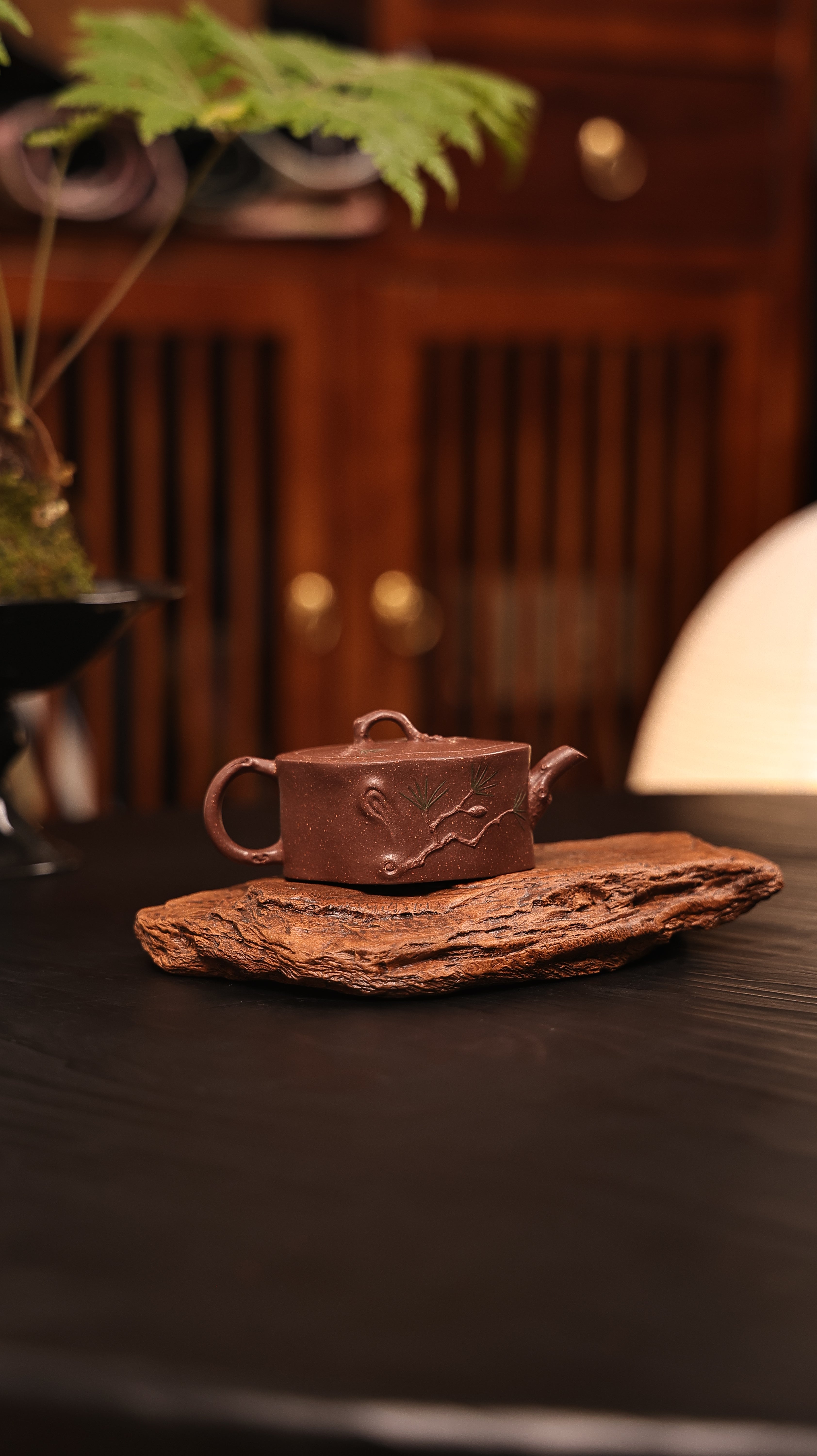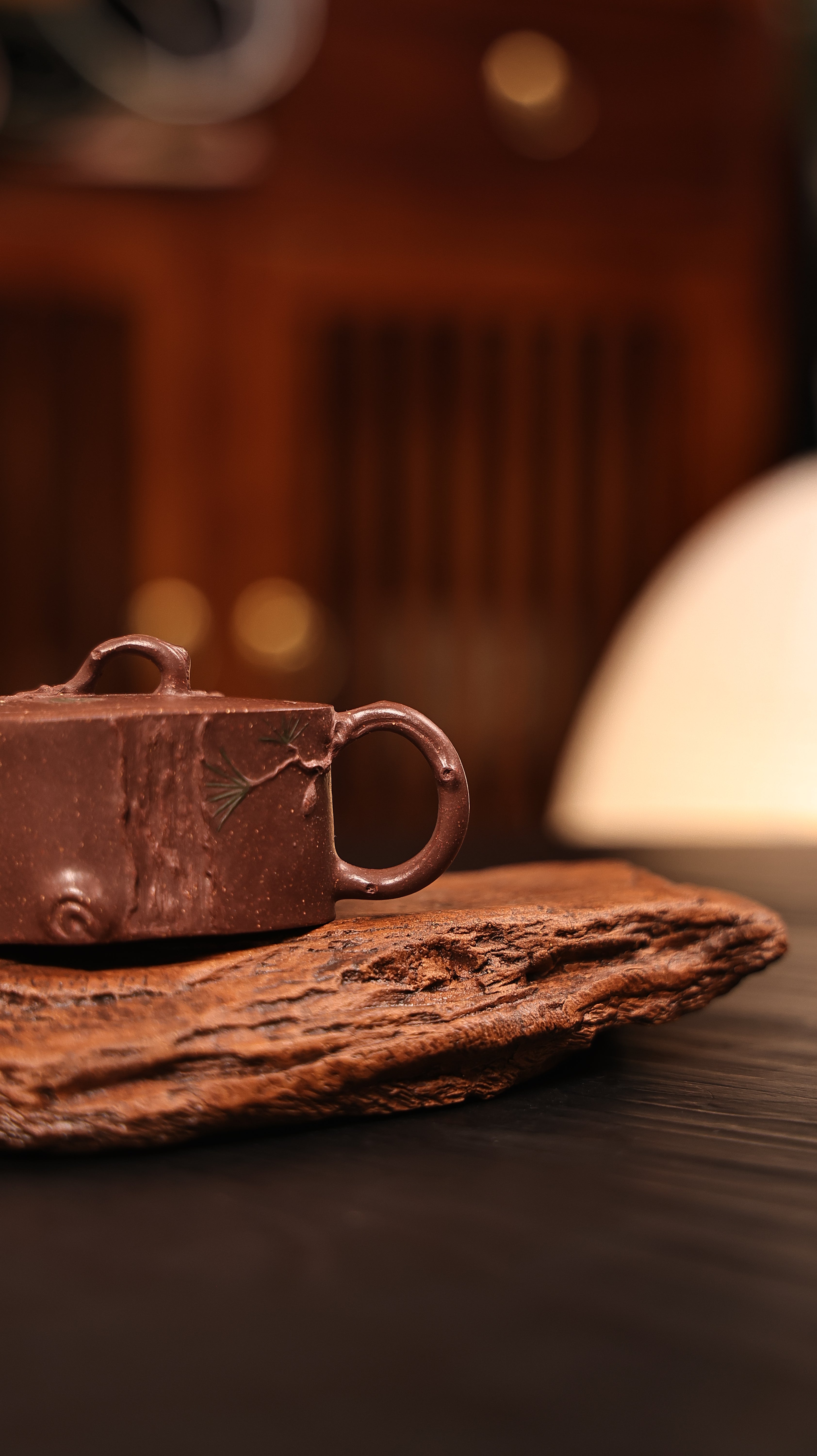
Continual tradition distinguishes Minjiang jugs through ages,
Showcasing uncommon aspects obtained within indigenous aubergine particles, those earthenwares gain a glow along operation, strengthening essence emanated from made potions.
Recognizing Yixing Mud: Complete Insights into Zisha
Diverse lovers celebrate the exceptional makeup of Yixing plum clay, a base of time-honored Chinese ceramics. Emerging from the Yixing region of Jiangsu province, this rare clay demonstrates an delicate mineral configuration, such that gives remarkable qualities to the final pieces. Models within Zisha, including Zi Mud, Duan Ni Mud, and Jiang Xi Mud, each displays special pigments, grains, and temperatures traits, altering the permeability and the final accent maturation of the drink.
Far Eastern Teapot Rituals: Uncovering Skill
Celestial teapots embody surpassing mere receptacles for infusion; they manifest centuries of heritage skill. From the legendary Yixing clay variations, respected for their open nature which transfers extraordinary aromas to the liquid, to the ornate porcelain from Jingdezhen, each piece conveys a story of craft. The fabrication process is an involved mission, often passed down through houses of makers. These makers use classic techniques such as hand-building, carving on wheels, and embellishing, demonstrating profound reverence for the element and the art itself. Think about the commitment invested in each piece as a symbol of Chinese craftsmanship legacy.
- Zisha jugs: a classic alternative.
- High-quality porcelain teapots: noted for their elegant design.
- Hand-building techniques: a difficult yet rewarding procedure.
Fine Purple Teapot Protection: Curing Your Valuable Artifact
Fitting upkeep of your distinguished Yixing Zisha jar is essential to maintaining its condition. Crafted from recognizable purple sand soil, these first-rate teapots build a warm patina after utilization, substantially boosting their allure. Stay away from washers; a soft rinse with moderate temperature hydrous matter is adequate. Avoid steaming water for refreshing the teapot, as it may harm its material. Allow it to desiccate away from unfiltered sunlight. Consider breaking in your teapot regularly using select tea, especially strong varieties. Here is a brief account:
- Wash with moderately heated hydrating medium.
- Withhold agents.
- Allow it to dry fully.
- Condition with excellent tea.
Background of Yixing Teapots: Initial Phases
The saga of Yixing teapots arises fundamentally during the Ming dynasty, around the 16th period. Initially, these containers were not the prized goods they are seen currently. They were made by regional potters using the distinctive purple clay sourced solely in the Yixing vicinity. These early works were predominantly utilitarian, aimed for daily use and often ordinary in composition. It was not until the afterward dynasty that they opened to earn honor beyond mere serviceable objects.
Deciding On the Best Purple Pot: A Starter's Explanation
Starting the field of Yixing teapots can be formidable, but never concern! For novices, the central factor is understanding the sediment. Original Yixing clay is prized for its ventilation, allowing the teapot to retain the tea's flavor over time, increasing every extracting session. Evaluate the shape; traditional round shapes prevail, yet specific preferences influence. Lastly, assess the surface—while some favor an basic appearance, others value a mild gloss. Take your time in the option process—this is an buying in a treasured piece of craftsmanship.
Traditional Clay Urns and Their Effect on Chinese Potion Ceremony
Zisha containers, existing from Yixing, China, have profoundly changed ancient Chinese potion culture. Those Yixing clay teapots, prized for their distinctive cast, surface, and exceptional ability to impart a subtle flavor to the liquid, are more than mere utensils; they are respected artworks and symbols of prominence. The very act of preparing and serving elixir using a Zisha teapot is Yixing Teapot steeped in heritage, elevating the experience beyond simple refreshment. Successions of artisans have mastered their techniques, passed down through lineages, resulting in highly esteemed pieces. Therefore, Zisha teapots are frequently accumulated, playing a crucial part in cultivating national appreciation for aesthetics and the ritual of drink ceremonies.
- Singular Clay Composition
- Providing Subtle Flavor
- Detailed Craftsmanship
Determining Verified Precious Regional Pottery
Procuring a genuine Yixing teapot can be a satisfying experience, but the environment is often infested with frauds. Differentiating between a original antique and a recent reproduction requires precise inspection. Key clues include the clay's mahogany shade, often displaying striped textures, and the void of modern kiln imprints. The contour should indicate natural elegance, reflecting the traditional Yixing approach. Finally, reviewing the potter's seal is fundamental to verify certainty against known archives.
- Assess the clay's fabric.
- Look for imperfections, indicative of manual quality.
- Hire an consultant for confirmation.
Purchasing Native Teapots: A Thorough Manual to Ceramics Appreciation
The realm of Chinese Zisha earthenware delivers a outstanding opportunity for astute buyers. Steadily, the valuation of these well-made artifacts is steered by various elements, such as the grade of purple clay, the mastery of the craftsman, the heritage relevance, and, naturally, the contemporary appetite. Apprentices should familiarize themselves on grasping the varied characteristics of Zisha clay—such as Binghu, 杜宁, and Red Clay—and learning about the characteristics linked to each. Careful examination of the vessel's shape, complexion, and badge is correspondingly paramount to make experienced judgments when investing.