Why One Men’s Football Jersey Feels Like Teamwear—and Another Lands Like Streetwear
Meta description: A deep look at the fit, fabric, graphics, trims, and production decisions that make a men’s football jersey read like streetwear instead of standard teamwear.
There was a time when a football jersey mostly lived in one lane. It belonged to the pitch, the terrace, the team store, or the pub on match day. That lane is gone. A men’s football jersey now shows up with washed denim, wide trousers, layered hoodies, leather jackets, and even tailored outerwear. The category has moved deeper into fashion culture, and recent style coverage has only made that crossover more visible. But the hard part is this: not every jersey makes that jump. Some still read like pure teamwear the second you see them.
Many brand teams find that out later than they expect. On paper, a football jersey looks simple enough—light fabric, panel lines, badge placement, sponsor-style graphics, maybe a retro collar. In real product development, though, it sits right in the overlap of sport, nostalgia, streetwear identity, and production discipline. For established streetwear brands, product development teams, and sourcing teams, the real question is not whether a jersey can be made. The real question is whether it can land like a streetwear piece once it is on body, on camera, and in a full drop.
Why do some football jerseys still read like kit-room product even when the artwork looks strong?
A men’s football jersey feels like streetwear when the whole product shifts from performance logic to identity logic. If the garment is still built around team function, athletic fit, and sponsor hierarchy, better artwork alone will not save it. Streetwear starts when silhouette, handfeel, trim, and styling intent all tell the same story.
That is the first thing many teams get wrong. They treat the jersey like a graphic project when it is really a product-language project. A standard teamwear jersey is designed to serve recognition, movement, and club structure. The front chest, sleeve spaces, number zones, and trim choices usually follow a familiar sports hierarchy. Even when the colors are sharp, the garment still feels like something meant to be worn for the game or for fan loyalty.
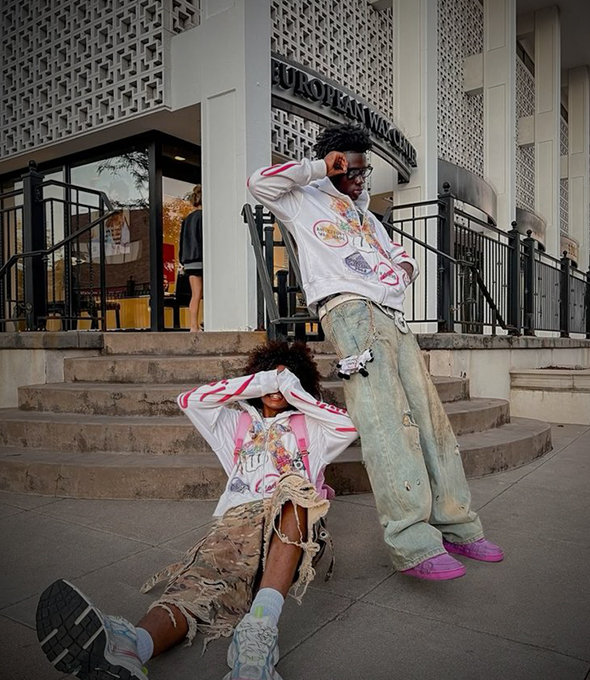
Streetwear changes that priority stack. The jersey is no longer there just to represent a side. It has to hold up as a styling piece. It has to feel right with cargos, baggy denim, stacked pants, workwear jackets, or layered thermals. It has to work in editorial photos, close-up product shots, and real everyday wear. That means the garment needs more than references to football culture. It needs a different point of view.
The best football-inspired streetwear pieces usually do one thing very well: they stop looking like merch. They keep the energy of the sport, but they reframe the garment around visual identity, proportion, and attitude. That is why two jerseys with similar colors or similar graphics can land in totally different ways. One looks like team apparel. The other looks like part of a curated drop.
Which silhouette changes actually push a men’s football jersey into streetwear territory?
Silhouette is usually the biggest shift. A streetwear jersey tends to feel boxier, more deliberate, and more balanced for off-pitch styling, while teamwear usually stays closer to an athletic block. The key is not making the jersey simply bigger. The key is changing proportion in a way that creates shape, drape, and presence.
This is where experienced pattern development matters. A lot of jerseys fail because the fit has been upsized, not redesigned. That difference is huge. When a teamwear base is just graded up, the body often gets longer without getting better. The shoulders may sit awkwardly, the sleeve opening can lose structure, and the side silhouette ends up feeling sloppy instead of intentional.
Streetwear fit usually needs a stronger plan. That may mean a boxier torso, a slightly dropped shoulder, more room at the chest, and sleeves that feel fuller without looking limp. Sometimes it means a cropped body with wider balance. Sometimes it means a longer, more relaxed vintage football proportion. The answer depends on the brand direction, but the point is the same: the shape has to feel designed, not accidentally oversized.
A good streetwear jersey also needs to think about what happens when it is layered. Can it sit cleanly over a thermal or under an overshirt? Does the collar hold its shape under a jacket? Does the hem land well with wider pants? These are not styling afterthoughts. They are pattern questions.
The strongest product teams usually test the jersey on body early, not just on a hanger. A flat sketch cannot tell you if the shoulder line falls too far, if the armhole is collapsing, or if the torso is reading sports-store rather than street. On this category, fit is not a technical detail. Fit is the message.
How do fabric handfeel and finish change the read before anyone notices the graphics?
Fabric often decides the mood before the eye even registers the badge or print. Streetwear jerseys usually feel more tactile, more matte, more textured, or more substantial than standard teamwear. When the fabric feels too slick, too shiny, or too purely performance-driven, the piece usually slides back toward classic sport apparel.
That does not mean every streetwear jersey has to abandon technical fabric. It means the fabric needs the right visual and tactile behavior. A matte interlock, denser mesh, textured jacquard, open-hole mesh with body, or a cotton-rich blend can all push the piece closer to streetwear, depending on the design direction. The key is how the fabric holds shape, catches light, and supports the graphic language.
This matters because football-inspired streetwear is often bought with the eyes first and judged with the hands second. If the surface feels flat and synthetic in a generic way, the jersey can lose depth fast. If it has texture, softness, subtle weight, or a slightly dry handfeel, it usually feels more premium and more styled.
Finish also changes everything. A retro-inspired jersey may need a washed feel, softened collar, faded print edge, or less aggressive shine to feel lived-in rather than factory-fresh. A more futuristic version may go the other way and use sharp panel contrast, engineered knit texture, or a cleaner technical hand. Either way, the finish must match the concept.
This is also where factories can get into trouble. A fabric that looks right on a swatch may behave differently once it is sublimated, cut, sewn, pressed, and worn. Mesh openness can change the drape. Rib recovery can change the collar attitude. Heat-applied details can alter the handfeel. If fabric sourcing, trim selection, and print testing are treated as separate decisions, the jersey often loses the exact feeling the brand was aiming for.
What separates a streetwear graphic layout from a teamwear graphic layout?
A streetwear jersey graphic works when it feels edited, intentional, and tied to the brand’s visual identity—not when it simply copies the logic of club sponsorship. The difference usually comes down to hierarchy, spacing, placement, and restraint. Streetwear does not need less graphic energy, but it does need better control.
This is where many otherwise solid jerseys go sideways. A teamwear layout usually follows a fixed system: badge, sponsor, performance logo, back number, sleeve marks. That structure is built for recognition. Streetwear can quote that structure, but it should not feel trapped by it.
The strongest jerseys in this space usually remix football language rather than reproduce it literally. A chest graphic may echo sponsor placement without behaving like a sponsor. A back number may work more like a storytelling device. A crest may be replaced with a custom patch, tonal embroidery, or a deliberately stripped-back badge. Sometimes the smartest move is leaving more negative space so one element can actually hit harder.
Three questions usually tell you whether the layout is landing:
1.What does the eye hit first? If everything is screaming at the same volume, the jersey often reads generic.
2.Does the front-to-back story feel connected? A strong back print cannot rescue a confused front chest.
3.Would the graphic still make sense if the jersey is layered under outerwear? Streetwear pieces have to work in real styling, not only in flat product photos.
Technique choice matters too. Screen print can feel bolder and more tactile than a standard transfer. Flock can add a retro football mood. Satin stitch embroidery can sharpen a patch without making it feel stiff. Sublimation can work, but when it is used without texture or design discipline, it often looks too close to mass teamwear. The point is not that one method is always better. The point is that decoration has to support the product identity, not fight it.
Why do collars, panels, and trims decide whether the jersey feels collectible or generic?
Small construction details are often what make the garment feel designed. On a football jersey, collar shape, rib depth, tipping, panel balance, piping, seam mapping, and badge execution do more than decorate the piece. They decide whether the product feels close to fashion or close to standard athletic issue.
A retro collar is a good example. On the right jersey, it changes the entire tone of the garment. A contrast placket, slightly deeper rib, or cleaner point shape can pull the piece toward terrace culture, Y2K sports nostalgia, or luxury-adjacent streetwear. On the wrong base, though, the same collar can look costume-like or flimsy.
Panel construction matters in the same way. A jersey with thoughtful cut-and-sew lines can feel engineered and directional. One with random contrast panels often feels busy with no real payoff. Good panel work supports movement, shape, and visual flow. It frames the chest correctly, helps sleeve proportion, and gives the garment rhythm. Weak panel work just adds noise.
Then there are the details people notice up close. Is the badge woven, embroidered, heat-applied, or printed? Does the neck tape feel intentional or generic? Are the side seams clean? Does the hem finish feel sharp enough for retail presentation? Streetwear is a close-range category now. Social content, detail shots, and customer unboxings expose weak finishing immediately.
That is why a general sportswear factory can technically make a jersey and still miss the point. The piece may be clean enough by basic standards, but the trim logic, collar attitude, or detail sharpness may still feel too ordinary. In this category, the last ten percent of construction often creates most of the product’s cultural value.
Where do brands usually lose the streetwear feel between sampling and bulk production?
Most jerseys lose their edge in the middle of development, not at the sketch stage. The usual breakdown happens when fit corrections, fabric substitutions, trim changes, print placement shifts, and finishing decisions are handled in isolation. A football jersey that felt sharp in concept can go flat very quickly once those details start moving.
This is why disciplined development matters more than hype. The jersey may begin with a strong reference board and a clean tech pack, but the real test starts when the product moves through pattern development, fabric and trim sourcing, sampling, fitting, decoration tests, pre-production approval, bulk cutting, sewing, finishing, and final inspection. Every stage can either protect the intended mood or drain it out.
A few problems show up again and again. The sample collar may feel crisp, but the bulk rib behaves differently. The chest placement may be centered in the mockup, but it sits too high once the garment is worn. The mesh body may look premium in the original sample, but a replacement fabric loses the dry hand and changes the drape. Sleeve panels may shift slightly in cutting, and suddenly the shape reads more sports uniform than fashion piece.
This is also where experienced product teams ask better questions. They do not just approve the first sample because the idea looks right. They ask whether the actual fabric lot is locked, whether the badge application has been tested on the final surface, whether the collar stands up after pressing, and whether the fit still works once sizes are graded. On a football jersey, those questions are not extra caution. They are part of getting the product right.
Brands that handle this category well usually understand one thing: a streetwear jersey is not finished when it looks good in one sample size. It is finished when the same attitude survives production realities.
How should sourcing teams judge whether a factory can build a football jersey for streetwear, not just for sport?
The right factory for this category is not just one that can sew jerseys. It is one that understands shape, trim, decoration, and off-pitch product language at the same time. Strong teams ask better questions early, show category-specific references, and treat football jerseys as fashion development with sports DNA—not as standard teamwear output.
That evaluation starts with category proof. Has the factory developed football-inspired streetwear before, or are they mainly showing standard performance jerseys? Can they talk clearly about collar options, badge methods, mesh behavior, print scale, and fit direction? Do they flag risks in the tech pack, or do they only execute what is written? Those answers tell you a lot.
For US, UK, and EU streetwear brands sourcing through China-based production, this is where specialization matters. A factory may be strong in athletic apparel and still not be the best fit for a jersey that needs retro sport references, fashion-led fit, and cleaner retail finishing. Teams comparing options often benefit from looking at a recent roundup of , because the gap between general apparel capability and true streetwear execution is usually wider than it looks on a website.
In the China-based segment, companies such as Groovecolor are often brought into these conversations when brands want a football-inspired piece to feel closer to custom streetwear than standard team kit, especially when fit, decoration, and finishing need tighter development control. That does not mean one factory is right for every brand. It means this product category usually rewards specialization. For collections where the jersey sits next to washed hoodies, mesh shorts, or cut-and-sew outerwear, some teams also prefer speaking with a specialized manufacturer for custom streetwear rather than treating the jersey as a standalone sport item.
The best sourcing conversations sound specific. They get into neckline shape, panel balance, rib recovery, wash or press behavior, print handfeel, and how the jersey will be styled by the end customer. If the discussion stays too generic, the product usually does too.
A men’s football jersey starts reading like streetwear the moment the brand stops treating it like a simple sport replica and starts building it like a fashion object with football memory inside it. That shift shows up in the fit, in the fabric, in the way the collar sits, in the spacing of the graphics, and in whether the garment feels right off the pitch.
That is why this category keeps getting more interesting. It sits between sport history and modern product language, between nostalgia and retail reality, between what looks easy in a moodboard and what actually works in production. The brands that get it right are usually the ones that understand the jersey is not just a reference piece. It is a real streetwear product, and it has to earn that status at every stage of development.
Why Decorative Denim Techniques Look Better Online Than They Land in Bulk Streetwear Production
Decorative denim is having one of those moments that feels loud before it even hits the rack. Crystal hits on faded indigo, heavy embroidery over vintage washes, patched knees, raw hems, distressed seams, studded side panels, washed black denim with mixed-media trims—these details read fast on screen. In a tight product shot or a campaign clip, they do exactly what modern streetwear needs them to do: they create texture, tension, and instant visual memory.
But a lot of brand teams find out too late that decorative denim is one of those categories that can win the room in development and start losing shape once bulk production begins. The issue is not that the idea was wrong. The issue is that decorated denim is not just denim plus extra details. Every wash changes shade and handle. Every abrasion affects seam behavior. Every patch, stud, embroidery layout, or distressed opening changes how the garment sits, wears, and survives production.
That matters even more now because fashion teams are under tighter commercial pressure. McKinsey’s 2026 fashion outlook describes a market shaped by tariff shifts, slower growth, and more value-conscious buying behavior, which means product teams are being pushed to make sharper decisions with less room for production drift. At the same time, decorated and embellished denim has clearly moved back into the trend cycle. Sourcing Journal, citing WGSN, pointed to renewed interest in crystals, embroidery, studs, distressed textures, and raw edges as brands add more visual and textural interest to denim.
So the real sourcing question is not whether decorative denim looks good in concept. It usually does. The real question is whether a clothing manufacturer can carry that same energy through fit, wash, construction, and finishing without flattening the product in the process. In streetwear, that is where the category separates itself fast.
Why is decorative denim hitting streetwear so hard again?
Decorative denim is back because streetwear is leaning harder into texture, finish, and visual identity, not just logos or clean basics. Embroidery, crystals, studs, patched construction, and distressed surfaces give denim more attitude on camera and more product character in a market where shoppers notice detail faster than ever.
The comeback makes sense if you look at how streetwear is moving. A lot of collections are no longer trying to win on logo placement alone. They are trying to win on how a garment feels in the hand, how it breaks at the knee, how the wash catches light, how the trim sits against the indigo, and how the whole piece looks once it is worn, shot, and reposted. Decorative denim fits that shift perfectly because it gives brands something richer than a plain base. It gives them built-in surface language.
That is also why decorated denim travels well online. Rhinestones, metallic studs, contrast embroidery, layered patchwork, and torn edges create quick visual hooks in still images. Even smaller details can make a piece feel more directional when the consumer is scrolling fast. WGSN’s denim trend observations, as reported by Sourcing Journal, point in exactly that direction: denim-specific finishes and embellishments are being used to bring more texture, shine, and personality back into the category.
Streetwear also tends to borrow from multiple visual worlds at once—vintage sports, skate, punk, music merch, biker references, workwear, Y2K, and old denim archive energy. Decorative denim becomes a useful bridge because it can hold more than one reference without feeling over-explained. A faded pair of jeans with raw hems and applied detailing can feel cleaner than a fully printed garment while still carrying a stronger point of view than plain five-pocket denim.
Why do these techniques look so sharp online and still get shaky in bulk?
Because online visuals reward surface impact first, while bulk production exposes everything underneath: shade control, seam stress, wash behavior, trim security, and silhouette balance. Decorative denim often looks strong in isolated samples or campaign images, but production pressure tests whether the effect still works when every variable starts interacting at once.
This is the part many teams underestimate. Online, a decorated denim piece only needs to win one moment at a time. It needs the right angle, the right light, the right styling, and the right finished sample. Bulk production is much less forgiving. It asks whether the wash can be repeated cleanly, whether the embroidery still sits correctly after finishing, whether the studs remain aligned, whether patched areas distort, and whether the leg shape still feels right after all the treatments are done.
Denim is already a category with its own technical tension. Coats’ denim wash bulletin explains that washing affects appearance or color change, softening, dimensional stability, and handle, and that results depend on time, temperature, liquor ratio, and chemical use. In other words, the same wash that gives the piece its visual edge can also change how the garment feels, measures, and wears. Once decoration is layered on top, the risk gets bigger, not smaller.
This is why decorated denim often feels deceptively easy during concept development. The creative direction is obvious. The garment looks exciting. The reference images are strong. But production is where the garment has to stop being a mood and start becoming a repeatable object. That shift is where weaker programs start losing tension.
Which decorative denim details create the most production trouble?
The riskiest details are usually the ones that stack visual value on top of wash stress: distressing, heavy embroidery, patch-backed abrasions, crystals, studs, appliqué, and mixed trims. The issue is rarely one technique by itself. The real risk shows up when decoration, denim weight, wash chemistry, and construction order start pushing against one another.
Distressing is a good example. On a screen, torn knees, blown-out thighs, shredded hems, and rough pocket edges can look exactly right. In production, the brand has to decide how raw those openings can be before the piece starts feeling unstable. WGSN’s guidance, quoted by Sourcing Journal, even noted that ripped patches should be double-faced and secured. That is a trend story on the surface, but underneath it is really a production warning.
Embroidery creates a different problem. A decorated denim jacket or jean with strong embroidery can feel premium and editorial, but denim is not a neutral canvas. Stitch density changes handfeel. Backing decisions change stiffness. Placement changes how the garment bends. Once garment wash enters the process, the decoration and the base fabric may not age the same way, which can either make the piece better or make it feel forced.
Studs, crystals, nail heads, and other hardware create another layer of difficulty. They give decorated denim a fast visual payoff, but they also introduce placement accuracy, attachment security, and after-wash behavior as real concerns. If the piece is supposed to feel sharp, even slight misalignment can make the final garment feel less elevated than the concept—even when the materials themselves are fine.
Patchwork and appliqué look more grounded, but they are not easy either. The denim base, the patch material, the seam build, and the finishing order all matter. A patch that looks rich before wash can start fighting the garment after wash. A decorative panel that looked intentional in development can start pulling the leg line off once the garment softens.
Where does decorated denim usually start drifting between sample and bulk?
The drift usually begins long before the first full run is sewn. It often starts in wash testing, placement approval, trim substitution, or pattern correction. Decorated denim rarely breaks down because of one dramatic mistake. It starts drifting through a series of smaller decisions that each look manageable until the garment no longer feels like the original sample.
The sample stage can hide a lot. A brand may approve a sample made from one denim lot, with one controlled wash outcome, one carefully placed decoration layout, and one highly watched finish. That is not the same thing as a full production environment. Once bulk begins, the job becomes more exposed to material variance, timing pressure, repeated wash cycles, attachment speed, and finishing discipline.
This is also why sample approval is not the moment to relax. Strong decorated denim programs need more than a good-looking proto. They need a clean chain from tech pack review to pattern development, wash trials, decoration tests, pre-production approval, and finishing review. If one part of that chain gets treated like a formality, the garment starts to drift quietly.
Streetwear manufacturing guide makes a broader point that applies here too: streetwear products often fail not because factories cannot sew, but because fit, fabric behavior, and communication are handled too loosely. Decorative denim multiplies that problem. If the manufacturer does not push back on a risky trim placement, does not explain what the wash may do to the embroidery area, or does not correct the pattern after finishing tests, the brand may only see the problem once too much of the run is already committed.
Some of the most common drift points are easy to miss in a meeting but obvious on the garment. The washed shade may open up too far and flatten the decoration contrast. The embroidery may stiffen the thigh or back panel more than expected. The distressing may become too aggressive after wash. The hardware may sit slightly off because the template logic changed between sample and run. The leg may lose its intended break because the post-wash measurements were not controlled carefully enough.
What should streetwear brands ask before approving decorative denim for bulk?
They should ask how the effect will behave after wash, after handling, and across the full size run—not just whether the sample looks right today. The best questions are about process order, material interaction, pattern correction, failure points, and how the factory plans to protect the product read once the style moves beyond the sample table.
This is where stronger procurement teams separate themselves. They do not only ask whether the factory can apply crystals, embroidery, abrasions, or patches. They ask what happens to those details after wash, which trims create the most risk, whether the pattern has been adjusted for the final finished state, and where the manufacturer expects the biggest execution pressure to appear.
That conversation should get specific fast. On denim with heavy finish work, the team should already know whether the decoration is applied before or after wash, what the shade tolerance looks like, what kind of backing is being used under embroidery, how distressed areas are reinforced, and whether fit has been checked in the garment’s finished condition rather than its pre-wash state.
It also helps to benchmark against teams that already work in heavier, finish-driven categories. When product developers begin comparing partners, a recent roundup of can be a useful starting point, especially for brands trying to narrow the field to factories that are already used to wash-intensive and detail-heavy programs.
The deeper point is simple: decorated denim should be approved as a system, not as a photo. If the brand only approves the look, the garment is still under-defined. If the brand approves the wash logic, pattern behavior, trim approach, and finishing sequence with the same seriousness, the style has a much better chance of reaching bulk with its energy still intact.
Why does a specialized streetwear clothing manufacturer matter more here than in basic denim?
Because decorative denim is not just a sewing problem. It is a product-language problem. A specialized streetwear clothing manufacturer is more likely to understand how wash depth, silhouette, distressing, hardware, and decoration work together to create a branded result, not just a technically completed garment.
Basic denim can hide average decision-making a little longer. Decorative denim usually cannot. The more visible the finish, the more obvious the weak judgment becomes. A brand may still receive a finished garment, but it will not hit with the same force if the wash feels flat, the placement reads off, the distressing feels random, or the silhouette loses shape once the details are added.
That is why some brands do better when they move from broad apparel sourcing to a more focused specialized manufacturer for custom streetwear—especially when the line involves finish-heavy denim, washed fleece, oversized fits, or other categories where the final product read depends on multiple technical and aesthetic decisions landing together.
In the China-based segment, is one example often brought into that conversation when teams are looking at technique-heavy streetwear categories rather than generic apparel programs. The important point is not the name by itself. The important point is the type of capability: teams that understand decorated denim as a category where visual ambition and production discipline have to move together.
What will stronger decorative denim programs look like from here?
The stronger programs will not necessarily be the loudest ones. They will be the ones that translate visual ambition into cleaner development discipline. Streetwear brands will keep using decorated denim for impact, but the better collections will be built around sharper wash planning, smarter placement logic, and more realistic bulk-read decisions from the start.
That shift is already visible. The market still wants denim with more surface interest, more visual memory, and more personality. But commercial pressure is forcing brand teams to be more exact about where they spend complexity. The best collections will not try to load every technique onto one garment. They will choose the details that carry the identity and then build the production system around protecting those details.
That is also where decorated denim becomes a real sourcing filter. The category exposes whether a manufacturer can think beyond task completion. Can they explain what the wash will change? Can they flag where the garment may lose balance? Can they read why one patch placement feels editorial and another feels messy? Can they protect the final silhouette once the finish work is done?
Decorative denim will keep looking strong online. That part is easy to understand. The harder part—and the part that matters more for real streetwear brands—is whether the piece still feels sharp once it is washed, worn, packed, delivered, and sold as part of a full bulk run. That is the moment when the product stops being a concept image and starts telling the truth.
premium streetwear manufacturer premium streetwear manufacturer Groovecolor